
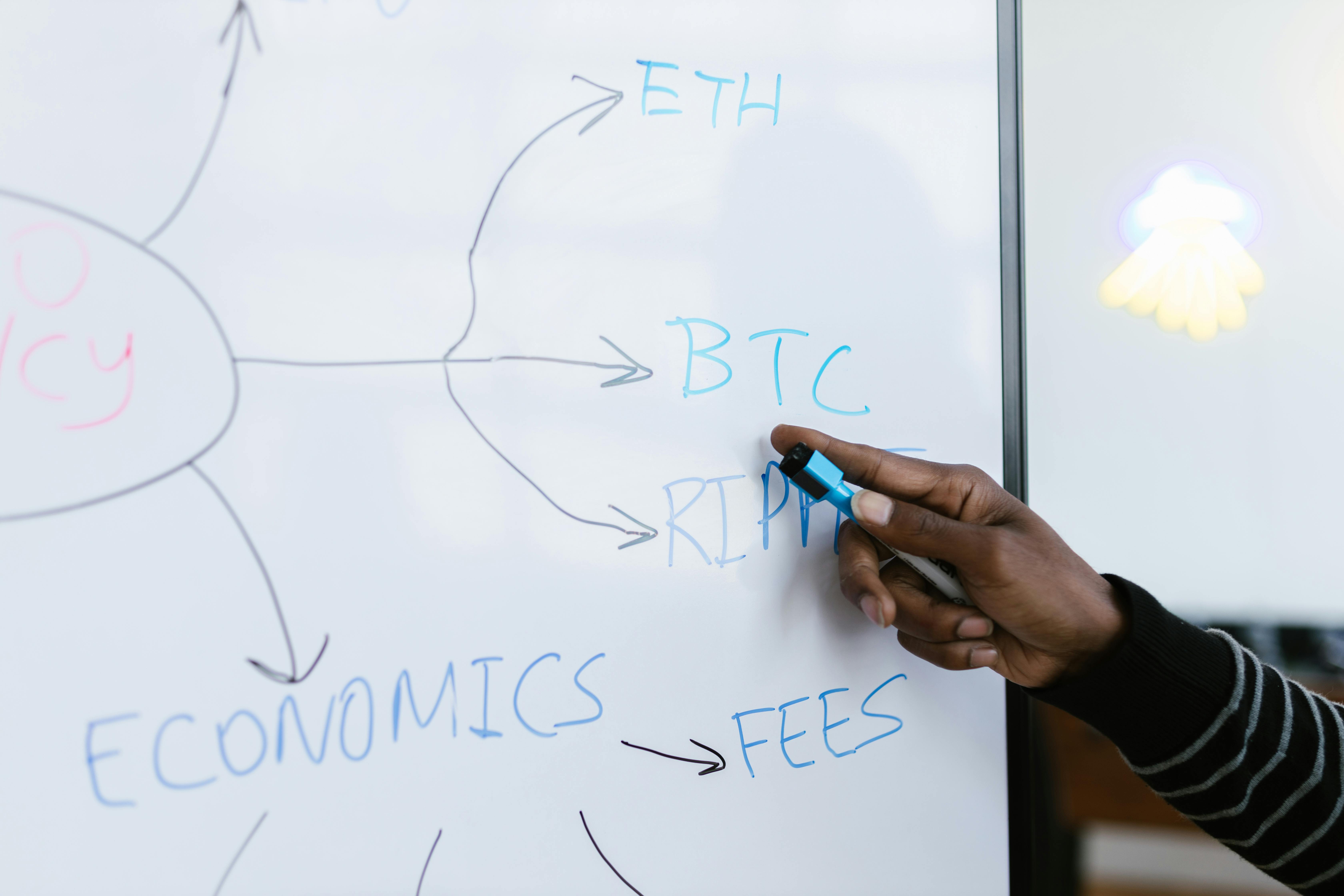
In 2026, real-world asset (RWA) tokenization has emerged as the most transformative force in finance, bridging traditional markets with blockchain innovation. Discover how digital assets backed by tangible value – from real estate and private credit to government bonds – are offering unprecedented investment opportunities, enhanced liquidity, and superior yields. This comprehensive guide explores the best RWA platforms and strategies for investors seeking to capitalize on this multi-trillion-dollar market shift.
Introduction to the Topic
The year is 2026, and the financial landscape has undergone a seismic shift. While the initial cryptocurrency boom was driven by speculative fervor around digital currencies, the current era is defined by a far more profound evolution: the tokenization of real-world assets (RWAs). This isn't just about putting assets on a blockchain; it's about fundamentally reshaping how we own, trade, and generate yield from everything from multi-million-dollar skyscrapers to private credit loans and government bonds. The promise of decentralized finance (DeFi), once confined to esoteric crypto protocols, has now matured, integrating seamlessly with traditional finance (TradFi) through RWA tokenization, unlocking a multi-trillion-dollar market.
For discerning investors, the question is no longer if RWAs will dominate, but how to best position oneself to capture this immense value. Institutional adoption, once a distant dream, is now a cornerstone of the RWA ecosystem, with major banks, asset managers, and sovereign wealth funds actively exploring and deploying capital into tokenized instruments. This article will delve deep into the mechanics, benefits, and unparalleled investment opportunities presented by RWA tokenization in 2026, guiding you through the best options to diversify your portfolio and secure superior, asset-backed returns.
Backgrounds & Facts
Real-world asset tokenization involves converting the ownership rights of tangible or intangible assets into digital tokens on a blockchain. These tokens represent a verifiable, fractionalized share of the underlying asset, leveraging the transparency, immutability, and programmability of blockchain technology. While the concept isn't new, 2026 marks an inflection point due to several converging factors:
- Regulatory Clarity & Evolution: Governments and financial regulators worldwide have made significant strides in establishing legal frameworks for digital securities. Jurisdictions like Singapore, Switzerland, and the UAE have led the charge, creating sandboxes and clear guidelines that foster innovation while protecting investors. The EU's MiCA regulation, fully implemented, provides a cohesive framework, reducing jurisdictional arbitrage and increasing institutional confidence.
- Technological Maturity: Layer-1 and Layer-2 blockchains (e.g., Ethereum, Polygon, Avalanche, Solana, and even permissioned enterprise chains like Hyperledger Fabric or Avalanche Evergreen subnets) have achieved unparalleled scalability, security, and interoperability. Oracle networks are more robust, providing reliable off-chain data feeds crucial for RWA valuation and management.
- Institutional Infrastructure: Custodial solutions for digital assets have evolved, offering institutional-grade security and compliance. Financial institutions now possess the technological stacks and operational expertise to manage tokenized portfolios alongside traditional ones.
- DeFi Liquidity & Innovation: The DeFi ecosystem has matured beyond speculative lending, providing sophisticated mechanisms for collateralizing, lending against, and trading tokenized RWAs, creating deep liquidity pools and innovative yield strategies.
The primary asset classes being tokenized aggressively in 2026 include:
- Real Estate: Commercial properties, residential units, and development projects are being fractionalized, making high-value assets accessible to a broader investor base and significantly enhancing liquidity.
- Private Credit & Debt: Loans to small and medium-sized enterprises (SMEs), supply chain finance, and structured credit products are being brought on-chain, offering transparent underwriting, faster settlement, and new funding avenues.
- Government Bonds & Treasuries: Short-term U.S. Treasury bills and other sovereign bonds are tokenized, providing a compliant, stable, and high-yield alternative for on-chain liquidity, attracting significant institutional capital.
- Equities & Funds: Tokenized shares of public and private companies, as well as investment fund units, are gaining traction, promising faster trading and global access.
- Commodities & Precious Metals: Gold, silver, and other commodities are tokenized, offering direct digital ownership and easier transferability.
- Alternative Assets: Art, luxury goods, intellectual property, and even carbon credits are seeing increased tokenization, democratizing access to previously illiquid markets.
The benefits are clear: fractional ownership democratizes access, blockchain transparency reduces fraud and operational costs, instant settlement enhances capital efficiency, and global accessibility unlocks new investor pools. This convergence of traditional asset stability with blockchain efficiency is creating unprecedented opportunities for wealth generation.
Expert Opinion / Analysis
"By 2026, RWA tokenization isn't just a niche; it's a foundational layer for global finance," states Dr. Anya Sharma, Head of Digital Asset Strategy at BlackRock. "We're seeing a fundamental re-architecture of capital markets, where assets that were once illiquid and exclusive are now fractionalized, globally tradable, and transparently managed on-chain. This isn't just about efficiency; it's about unlocking trillions in dormant capital."
Industry analysts project the RWA tokenization market to exceed $10 trillion by 2030, with a significant portion of this growth occurring between 2026 and 2028. "The shift from speculative digital assets to yield-generating, asset-backed tokens is profound," explains Marcus Chen, CEO of CryptoInsights Pro. "Investors are moving beyond meme coins and even pure-play DeFi into instruments that offer both blockchain-native advantages and the inherent value of real-world collateral. This is where institutional money feels comfortable, and retail investors can find genuinely robust opportunities."
The regulatory landscape, once a major hurdle, is now seen as an enabler. "The proactive stance taken by regulators in leading financial hubs has been critical," notes Sarah Lim, a blockchain legal expert at TokenLaw Chambers. "Clear guidelines around security token offerings (STOs), custody, and secondary market trading have provided the necessary confidence for large-scale institutional participation. We're seeing a harmonization of legal frameworks globally, which is paving the way for truly cross-border digital asset markets."
Technological advancements are also key. The rise of zero-knowledge proofs (ZKPs) is enabling privacy-preserving compliance for RWA transactions, allowing sensitive financial data to remain confidential while ensuring regulatory oversight. Furthermore, advancements in decentralized identity (DID) solutions are streamlining KYC/AML processes, making investor onboarding more efficient without compromising security or compliance. The integration of AI for automated due diligence, risk assessment, and market analysis is further enhancing the efficiency and security of RWA platforms, making them more attractive than ever to a wide range of investors.
💰 Best Options in Comparison (VERY IMPORTANT)
For investors looking to capitalize on the RWA revolution in 2026, several distinct avenues offer compelling opportunities. Your choice will depend on your risk tolerance, desired asset class, and investment horizon. Here are three leading categories with examples of prominent platforms/protocols:
-
Tokenized Real Estate Platforms
These platforms allow investors to buy fractional ownership in high-value properties, from commercial buildings in major cities to luxury residential developments. They democratize access to real estate, traditionally an illiquid asset, making it accessible with smaller capital outlays and enhanced secondary market liquidity.
- Example: PropChain Global (Hypothetical but representative): A leading platform for institutional-grade tokenized commercial and residential real estate. Offers curated opportunities, often with rental yields and potential for capital appreciation. Utilizes robust legal frameworks for property ownership and robust smart contracts for dividend distribution.
- Example: BlocksEstate (Hypothetical but representative): Focuses on development projects and luxury vacation rentals, offering higher potential yields but also higher risk. Emphasizes community governance for certain property decisions.
-
On-Chain Private Credit Protocols
These protocols connect capital providers (lenders) with real-world businesses seeking financing, effectively bringing private debt markets onto the blockchain. They offer attractive, stable yields by collateralizing loans with real-world assets or verifiable cash flows, providing transparency that often surpasses traditional private credit markets.
- Example: Maple Finance 2.0: An established player offering institutional-grade lending pools to crypto-native and traditional businesses. Focuses on undercollateralized loans with robust risk frameworks and delegated credit assessment. Known for offering competitive, stable APYs.
- Example: Centrifuge Prime: A protocol specializing in tokenizing invoices, supply chain finance, and other forms of real-world collateral to provide liquidity to SMEs. Offers pools backed by diverse assets, allowing investors to earn yield from real-economy activities.
-
Tokenized Government Bonds/Treasuries
These platforms offer exposure to highly liquid, low-risk government debt securities (like U.S. Treasury bills) in tokenized form. They provide a compliant, stable, and accessible way to earn yield on-chain, often serving as a safe haven within the broader digital asset ecosystem, attracting both retail and institutional capital seeking stable returns without volatility.
- Example: Ondo Finance: A pioneer in offering tokenized U.S. Treasuries and money market funds, providing a stable, regulated yield source directly on-chain. Ideal for investors seeking low-volatility, compliant exposure to traditional fixed income within DeFi.
- Example: Backed Finance: Offers tokenized versions of various traditional assets, including ETFs and government bonds, accessible via major blockchains. Focuses on regulatory compliance and transparency, providing a bridge for TradFi assets into the digital realm.
- Cross-Chain Interoperability: The ability to seamlessly move tokenized RWAs across different blockchains will become standard, enhancing liquidity and market reach. Projects focused on interoperability protocols will be crucial.
- AI-Powered Due Diligence & Valuation: Artificial intelligence will play an increasingly critical role in automating the complex processes of asset valuation, risk assessment, and legal compliance for RWAs, reducing costs and increasing efficiency.
- Expansion into New Asset Classes: Expect tokenization to expand rapidly into intellectual property (patents, copyrights), carbon credits, royalties, and even human capital, unlocking new forms of fractional ownership and investment.
- Hybrid Financial Products: The line between traditional and decentralized finance will blur further with the emergence of hybrid financial products that combine the best of both worlds – regulated, asset-backed tokens traded on decentralized exchanges but settled through traditional legal frameworks.
- Global Regulatory Harmonization: As major economies refine their digital asset laws, a global consensus on regulatory standards for tokenized securities will emerge, facilitating cross-border investment and reducing fragmentation.
- Central Bank Digital Currencies (CBDCs): The widespread adoption of wholesale and retail CBDCs will provide a frictionless, programmable settlement layer for tokenized RWAs, significantly boosting transaction efficiency and security.
- Institutional Dominance & Retail Accessibility: While institutions will drive significant volume and infrastructure development, the fractional nature of RWAs will continue to democratize access for retail investors, creating a truly inclusive global financial market.
| Investment Category | Primary Asset Type | Target Investor | Typical Yield/Return (2026 est.) | Minimum Investment (est.) | Liquidity | Associated Risks |
|---|---|---|---|---|---|---|
| Tokenized Real Estate Platforms | Commercial/Residential Properties | Retail & Institutional, Long-term | 4-10% rental yield + appreciation | From $100 - $1,000 | Moderate (improving secondary markets) | Property market fluctuations, platform risk, regulatory changes |
| On-Chain Private Credit Protocols | SME Loans, Invoice Finance, Structured Credit | DeFi Users, Accredited Investors | 8-15% APY | From $500 - $5,000 | Moderate (pool-based, withdrawal periods) | Borrower default, smart contract risk, market demand |
| Tokenized Government Bonds/Treasuries | US Treasuries, Sovereign Bonds | Conservative Investors, DeFi Protocols | 4-6% APY (tied to prevailing rates) | From $10 - $100 | High (deep secondary markets) | Interest rate risk, smart contract risk, issuer default (low) |
Outlook & Trends
The trajectory for RWA tokenization in the coming years is one of exponential growth and deeper integration. By 2026, we are only scratching the surface of its potential. Here are key trends to watch:
The vision is clear: a future where virtually any asset, anywhere in the world, can be tokenized, providing unprecedented liquidity, transparency, and accessibility, ultimately creating a more efficient and equitable global capital market.
Conclusion
Real-world asset tokenization is not merely a fleeting trend; it is the inevitable evolution of finance. In 2026, it represents the most significant investment opportunity, offering a pathway to stable, asset-backed yields and diversification beyond traditional speculative crypto. By blending the inherent value and regulatory robustness of real-world assets with the efficiency and transparency of blockchain technology, RWAs are creating a new paradigm for wealth creation.
For investors seeking to optimize their portfolios for maximum returns and reduced volatility, exploring the burgeoning RWA ecosystem is paramount. Whether you're drawn to the stability of tokenized real estate, the attractive yields of on-chain private credit, or the security of tokenized government bonds, the options are diverse and rapidly maturing. As the world continues its digital transformation, those who embrace RWA tokenization today will be best positioned to thrive in the financial landscape of tomorrow. Don't just watch this revolution; participate in it and unlock the trillion-dollar opportunities that lie ahead.