
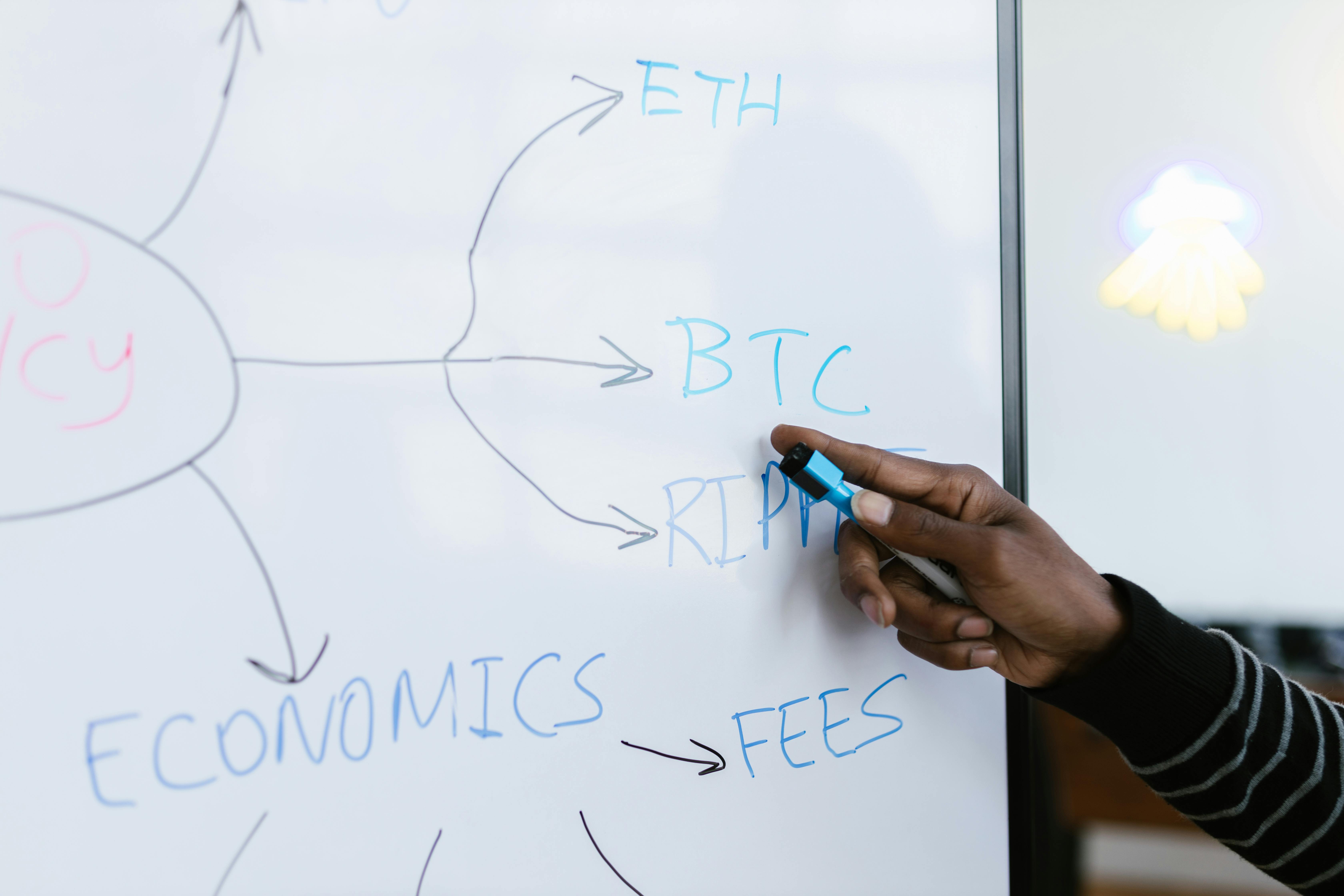
Discover how Real-World Asset (RWA) tokenization is revolutionizing finance in 2026, bridging traditional and decentralized markets. Learn about the top platforms, investment opportunities, and strategies to capitalize on this trillion-dollar crypto trend for institutional-grade yields and fractional ownership of property, private equity, and more. Optimize your portfolio with asset-backed digital securities and unlock unprecedented wealth.
Introduction to the Topic
Welcome to 2026, where the digital frontier of finance is no longer just about speculative cryptocurrencies or fleeting NFTs. A seismic shift is underway, fundamentally reshaping how we perceive and interact with value: Real-World Asset (RWA) Tokenization. This isn't just another buzzword; it's the convergence of the multi-trillion-dollar traditional finance (TradFi) world with the efficiency and transparency of blockchain technology. Imagine owning a fractional share of prime commercial real estate, accessing private credit markets, or investing in a portfolio of U.S. Treasury bonds directly from your crypto wallet, 24/7, with unprecedented liquidity. This future is not only here, it's rapidly maturing, presenting unparalleled investment opportunities for savvy investors looking beyond conventional crypto plays.
For years, blockchain enthusiasts envisioned a world where assets of all kinds – from property and art to commodities and intellectual property – could be digitized, creating frictionless markets. In 2026, this vision is becoming a tangible reality, driven by technological advancements, increasing institutional adoption, and a growing demand for yield-bearing, asset-backed digital securities. This article will serve as your essential guide, dissecting the RWA tokenization landscape, highlighting the key players, and equipping you with the knowledge to navigate and profit from what many experts are calling crypto's next trillion-dollar boom. Prepare to unlock massive wealth by understanding and engaging with Real-World Assets on the blockchain.
Backgrounds & Facts
Real-World Asset tokenization involves creating a digital representation, or 'token,' of a tangible or intangible asset on a blockchain. This token carries the same rights and value as the underlying asset, but with the added benefits of blockchain technology: immutability, transparency, programmability, and global accessibility. While the concept has existed for some time, 2026 marks a pivotal year for its widespread adoption and maturation.
The Evolution and Mechanics of RWA Tokenization
Early attempts at RWA tokenization faced significant hurdles, primarily legal ambiguities, regulatory uncertainties, and a lack of robust infrastructure. However, over the past few years, significant strides have been made. Legal frameworks in jurisdictions like Liechtenstein, Switzerland, and increasingly, the UAE and parts of the US, have provided clearer guidelines for the issuance and transfer of security tokens. Technologically, advancements in Layer 1 and Layer 2 solutions, cross-chain interoperability, and oracle networks have enabled secure and efficient linking of off-chain assets with on-chain representations.
The types of RWAs being tokenized are incredibly diverse: from real estate (commercial, residential, development projects) and physical commodities (gold, silver, oil) to private equity, venture capital funds, corporate debt, intellectual property rights, and even fractional ownership of luxury goods or high-value art. More recently, the tokenization of traditional financial instruments like U.S. Treasury bonds and money market funds has garnered significant attention, offering crypto investors exposure to stable, yield-bearing assets without leaving the blockchain ecosystem.
Why 2026 is the Tipping Point
Several factors converge to make 2026 a critical year for RWA tokenization:
- Institutional Influx: Major financial institutions, including banks, asset managers, and hedge funds, are actively exploring and implementing RWA tokenization strategies. They recognize the potential for increased efficiency, reduced settlement times, and broader market access.
- Regulatory Clarity: While still evolving globally, several key jurisdictions have provided regulatory sandboxes or specific guidelines for security tokens, fostering a more secure environment for issuers and investors.
- Technological Maturity: Scalable and secure blockchain infrastructure, coupled with advanced smart contract capabilities and reliable oracle services, now supports complex RWA ecosystems.
- Demand for Yield: In a world grappling with economic uncertainties, investors are actively seeking stable, predictable yields. Tokenized bonds, real estate, and private credit offer attractive, often higher, risk-adjusted returns compared to traditional low-interest savings or volatile crypto assets.
- Enhanced Liquidity and Fractionalization: RWAs, traditionally illiquid, gain enhanced liquidity through tokenization, allowing for fractional ownership. This democratizes access to high-value assets previously reserved for accredited investors, opening markets to a broader demographic.
The market size predictions are staggering. According to a recent report by Boston Consulting Group, the tokenization of illiquid assets alone could reach a market value of $16 trillion by 2030. In 2026, we are well on our way to seeing the initial multi-trillion-dollar segments of this market solidify, presenting an unprecedented opportunity for early movers.
Expert Opinion / Analysis
The consensus among leading financial analysts and blockchain pioneers is clear: RWA tokenization is not just a niche trend but the inevitable evolution of global finance. "We are witnessing the fusion of two worlds," states Dr. Anya Sharma, lead analyst at Blockchain Insights Group. "Traditional finance brings the assets, the regulatory understanding, and the capital, while blockchain brings the efficiency, transparency, and global reach. It's a symbiotic relationship that will unlock trillions in previously inaccessible value."
Michael Chen, CEO of institutional DeFi platform NexusFi, adds, "The shift from purely speculative crypto assets to value-backed, yield-generating tokens is a game-changer. It provides a more stable entry point for institutions and offers retail investors access to asset classes that were historically out of reach. This is where DeFi truly earns its 'finance' moniker."
Challenges and Opportunities
While the potential is immense, experts caution against overlooking the inherent challenges. Regulatory fragmentation remains a significant hurdle. A tokenized asset issued in one jurisdiction may face different legal interpretations elsewhere, complicating cross-border transactions. The legal enforceability of digital ownership, particularly in the event of default or dispute, requires robust legal frameworks and smart contract design that accurately reflects traditional legal instruments.
Oracle reliability is another critical factor. For a token to accurately reflect the value and status of its underlying real-world asset, secure and tamper-proof data feeds are essential. Innovations in decentralized oracle networks are addressing this, but continuous vigilance is required. Custody solutions for these hybrid assets also need to evolve, blending secure digital asset management with traditional legal and physical safekeeping.
Despite these challenges, the opportunities far outweigh them. The ability to fractionalize ownership of high-value assets, such as a skyscraper or a rare art collection, dramatically lowers the barrier to entry for investors. This democratizes wealth creation and provides unprecedented liquidity for asset owners. Furthermore, the programmability of money through smart contracts allows for automated dividend distributions, royalty payments, and complex financial instruments that are simply impossible or prohibitively expensive in traditional finance.
The role of institutions is paramount. Their participation brings credibility, capital, and a demand for compliant, robust solutions. As more banks and asset managers launch their own tokenization initiatives, the ecosystem will mature rapidly, leading to standardized practices and increased investor confidence. The future of finance, in 2026 and beyond, is undeniably tokenized.
💰 Best Options in Comparison (VERY IMPORTANT)
For investors looking to dive into RWA tokenization, understanding the leading platforms and their unique offerings is crucial. These platforms provide diverse avenues to invest in tokenized real-world assets, ranging from traditional financial instruments to private credit and real estate. Here's a comparison of some of the top contenders in 2026:
- Ondo Finance (ONDO): A frontrunner in bringing institutional-grade traditional finance products to the blockchain. Ondo offers tokenized versions of U.S. Treasuries, money market funds, and other stable, yield-bearing assets. It's ideal for crypto investors seeking exposure to low-risk, high-liquidity TradFi yields without leaving the DeFi ecosystem. Ondo emphasizes regulatory compliance and transparency, making it a favorite for those prioritizing stability and security.
- Centrifuge (CFG): Pioneering decentralized asset financing, Centrifuge connects DeFi liquidity with real-world businesses seeking financing against tangible assets like invoices, supply chain finance, and other private credit. Investors can provide liquidity to these pools and earn yield, participating in a historically illiquid asset class. Centrifuge offers diversification away from pure crypto volatility, providing access to predictable, often higher, returns from real-world business operations.
- Securitize (CURZ): A regulated platform operating as a registered broker-dealer and ATS (Alternative Trading System) in the US. Securitize specializes in the issuance and lifecycle management of security tokens across various asset classes, including private equity, real estate, and funds. It's a comprehensive solution for both issuers looking to tokenize assets and investors seeking compliant access to a wide range of tokenized securities. Securitize prioritizes regulatory compliance and institutional-grade infrastructure.
To help you choose the best fit for your investment strategy, here's a comparative overview:
| Feature | Ondo Finance (ONDO) | Centrifuge (CFG) | Securitize (CURZ) |
|---|---|---|---|
| Primary Asset Focus | Tokenized U.S. Treasuries, Money Markets, TradFi Funds | Private Credit (invoices, supply chain finance, real estate debt) | Wide range of Security Tokens (private equity, real estate, funds, art) |
| Target Investor | Crypto investors seeking stable TradFi yields | DeFi users seeking diversified, higher-yield private credit exposure | Accredited and institutional investors, issuers of security tokens |
| Regulatory Approach | Highly compliant, works with regulated entities | Decentralized protocol, focuses on legal enforceability of underlying assets | Regulated as Broker-Dealer & ATS in US, strong compliance focus |
| Typical Yield/Return | Correlates with TradFi rates (e.g., U.S. Treasury yields) | Variable, often higher than TradFi (e.g., 5-15%+ APR on private credit) | Asset-dependent, aligns with underlying equity/debt performance |
| Ease of Access | Relatively easy for DeFi users, often requires KYC/AML | Requires understanding of DeFi mechanics, often permissioned pools | Strict KYC/AML, often requires accredited investor status |
| Key Benefit | Stable, regulated TradFi yields on-chain | Access to high-yield, diversified private credit | Regulated issuance & trading of diverse security tokens |
Each platform offers a distinct value proposition. Your choice will depend on your risk tolerance, desired asset class exposure, and regulatory comfort. Always conduct thorough due diligence and consult with a financial advisor before making investment decisions.
Outlook & Trends
The trajectory for RWA tokenization in the coming years is one of accelerated growth and integration. By 2026, we anticipate several key trends to define the landscape:
- Hyper-Specialization of Platforms: Beyond general-purpose platforms, we'll see an emergence of highly specialized RWA tokenization protocols focusing on niche asset classes like fractionalized intellectual property, environmental credits (carbon credits), or even tokenized future revenue streams from artists or athletes.
- Regulatory Harmonization: While complete global uniformity is unlikely, increasing collaboration between international regulatory bodies will lead to more standardized practices and clearer cross-border guidelines, reducing friction and increasing investor confidence.
- Advanced Interoperability: Seamless transfer and utilization of tokenized RWAs across different blockchain networks (e.g., Ethereum, Solana, Avalanche) and between blockchain and traditional financial systems will become standard, enhancing liquidity and market efficiency.
- AI-Powered RWA Management: Artificial intelligence will play an increasingly vital role in due diligence, risk assessment, asset valuation, and even automated compliance monitoring for tokenized assets. AI-driven analytics will provide deeper insights into the performance and underlying health of RWAs.
- Growth of Secondary Markets: As the primary issuance of tokenized RWAs expands, robust secondary markets and alternative trading systems (ATSs) will mature, offering enhanced liquidity and price discovery for investors looking to trade their holdings.
- DePIN Integration: Decentralized Physical Infrastructure Networks (DePIN) will increasingly leverage RWA tokenization to finance and reward contributors for building and maintaining real-world infrastructure, from wireless networks to energy grids, creating a new paradigm for infrastructure investment.
- ESG Focus: Tokenization of assets related to environmental, social, and governance (ESG) initiatives, such as renewable energy projects or sustainable forestry, will gain traction, attracting impact investors seeking both financial returns and positive societal contributions.
These trends collectively point towards a future where RWA tokenization is not just a component of the digital economy but a foundational layer for a more efficient, inclusive, and globally accessible financial system.
Conclusion
The year 2026 marks a pivotal moment in the evolution of finance, with Real-World Asset (RWA) tokenization emerging as the most significant trend bridging the divide between traditional wealth and decentralized innovation. This is no longer merely a theoretical concept; it's a rapidly expanding market offering tangible, asset-backed investment opportunities with the potential for substantial returns and unprecedented liquidity.
By understanding the mechanics, appreciating the institutional shift, and identifying the leading platforms like Ondo Finance, Centrifuge, and Securitize, investors are now empowered to access asset classes previously reserved for the ultra-rich. From stable tokenized Treasuries to high-yield private credit and fractionalized real estate, the avenues for wealth creation are diverse and compelling.
As the market matures, driven by technological advancements, increasing regulatory clarity, and a relentless demand for yield, RWA tokenization is poised to unlock trillions of dollars in value, democratizing finance and redefining ownership. Don't be left behind. Educate yourself, explore these groundbreaking platforms, and position your portfolio to capitalize on crypto's trillion-dollar boom. The future of finance is here, and it's tokenized. Start your due diligence today and secure your stake in this transformative financial revolution.