
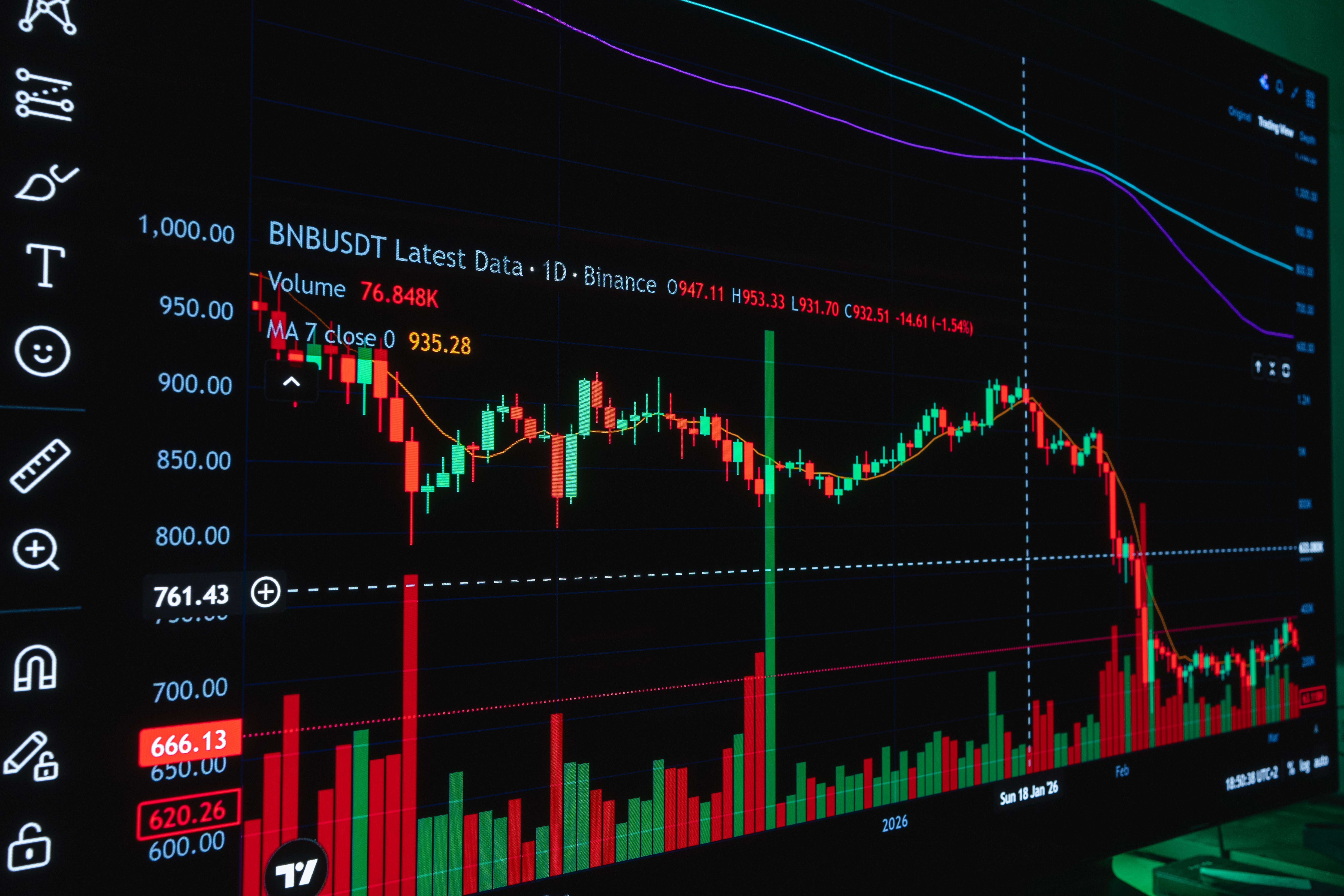
Every quoted share has two prices at once, one to buy at and a lower one to sell at. The gap between them is a payment, and it goes to whoever is willing to stand between buyers and sellers.
Someone has to hold the other side
Buyers and sellers rarely arrive at the same instant in matching sizes, so a firm steps in to buy from sellers and sell to buyers continuously, holding the imbalance on its own books.
That firm takes real risk. Between buying and finding a buyer, the price can move, and an inventory acquired just before bad news becomes a loss that no volume of spread income offsets.
The spread is the compensation for accepting that exposure, earned in tiny increments across an enormous number of trades rather than in large amounts on any single one.
Width reflects uncertainty, not greed
Spreads are narrow in heavily traded shares because inventory can be offloaded within seconds, so the period of exposure is short and the risk small.
Thinly traded shares carry wide spreads because a position may sit for hours or days before a natural counterparty appears, and the price can move substantially during that wait.
The same share can move between the two states. Spreads widen ahead of announcements and during volatile periods, since the chance of being caught on the wrong side rises sharply.
Informed traders are the underlying threat
A market maker cannot tell whether an incoming order comes from someone rebalancing a pension or from someone who knows something not yet public.
Trading against better-informed counterparties produces systematic losses, so the spread must be wide enough that profits from uninformed flow cover losses to informed flow.
This is why spreads widen when the probability of informed trading rises, and why shares with concentrated ownership or sparse disclosure tend to trade less tightly than widely followed ones.
The cost is invisible on a confirmation
A trade confirmation shows commission but not the spread, even though the spread is frequently the larger cost for anyone trading less liquid instruments.
Buying and immediately selling would produce a loss equal to the spread with no market movement at all, which is the cleanest way to see what has been paid.
Zero-commission platforms have not removed this cost. The order still crosses a spread, and in some arrangements the venue receiving the order shares part of that value with the platform.
Order type determines who pays it
A market order accepts whatever price is currently available, which means it crosses the spread and pays it in full.
A limit order placed inside the quoted prices offers to trade at a better level, and if it is filled the trader has captured part of the spread rather than paid it.
The trade-off is certainty. A market order executes immediately, while a limit order may never fill, and in a moving market waiting for a better price can cost far more than the spread would have.